Progressive Electronic
Top artists, related genres, and listener stats.
Progressive Electronic vinyl on Amazon ↗
Affiliate link — we earn a small commission at no cost to you.
Progressive electronic describes music built on synthesizers that pushes toward compositional ambition rather than pure texture or dance function. The progressive impulse can arrive from several directions: borrowings from classical, jazz, and world music, or structural devices such as counterpoint, odd time signatures, and polyrhythms that echo progressive rock. The palette is largely electronic, though early practitioners leaned on mellotrons, organs, synthesizers, and vocoders. Mood varies widely across the style, from serene, long-form synth meditations to dense, rhythmically restless constructions, but the common thread is a willingness to treat the synthesizer as a vehicle for complex, deliberately composed music. Among artists in progressive electronic, Sinoia Caves and Steve Moore both work in synth-driven composition that carries the genre's progressive ambitions, while Daniel Lopatin brings a similarly expansive approach to electronic sound. Fire-Toolz and Giant Claw extend the same territory into denser, more abrasive regions, showing how wide the stylistic range runs. For listeners searching for bands like these, the shared thread is not a single sound but a commitment to synthesizer music that favors structure, counterpoint, and cross-genre influence over straightforward repetition. The genre connects most directly to progressive rock, whose odd time signatures and polyrhythmic writing it frequently borrows, and to ambient music, which shares its synthesizer foundation and its interest in sustained, atmospheric form. Progressive electronic sits at the intersection of those two worlds: it inherits progressive rock's compositional ambition while adopting the electronic palette and textural patience associated with ambient. Its 1970s lineage, when artists such as Tangerine Dream and Vangelis applied synthesizers, organs, and vocoders to ambitious instrumental writing, established a template that later musicians continue to stretch in new directions.
About Progressive Electronic
Progressive electronic describes synthesizer-driven music that carries a progressive impulse, whether through the blending of classical, jazz, and world influences or through compositional devices such as counterpoint, unusual time signatures, and polyrhythms more commonly associated with progressive rock. The term took shape in the 1970s, when artists built pieces around mellotrons, organs, synthesizers, and vocoders. Contemporary acts working in this territory include Sinoia Caves, Stone Giants, and Daniel Lopatin, whose output reflects the genre's continued emphasis on texture and structure over conventional song form. The style sits alongside ambient and experimental electronic scenes, sharing with them an interest in atmosphere and studio-based composition while retaining a more deliberate, layered approach to arrangement.
Top Progressive Electronic artists
The most-listened-to artists tagged progressive electronic, ranked by listeners.
-
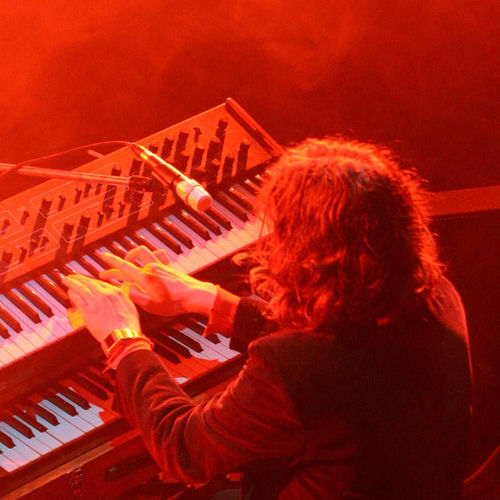 Sinoia Caves
-
 Stone Giants
-
 Daniel Lopatin
-
 Fire-Toolz
-
 yawning portal
-
 Giant Claw
- Umberto
-
 Steve Moore
-
 Majeure
-
 Amon Tobin
-
 Harald Grosskopf
-
 Craven Faults
-
 Lorenzo Senni
-
 Dominique Guiot
-
 1991
-
 ADR
-
 Cosmic Ground
-
 Hélène Vogelsinger
-
 Arcanist
-
 Steve Hauschildt
-
 You
-
 Die Wilde Jagd
-
 Kate NV
-
 Sensible Soccers
-
 Redshift
-
 Graham Kartna
-
 Ashra
-
 Deathpact
- Espectrostatic
-
 Patrick Vian
- Kaitlyn Aurelia Smith
- Pete Namlook & Klaus Schulze
- Baffo Banfi
- Manuel Göttsching
- Emerald Web
- Cacola
People also ask about Progressive Electronic
Who are the best progressive electronic artists?
Among the most listened-to progressive electronic artists are Sinoia Caves, Stone Giants, Daniel Lopatin, and Fire-Toolz.
What is Progressive Electronic?
'Progressive Electronic' is used to describe music played on synthesizers that is in some sense 'progressive.' 'Progressive' can refer to music influenced by diverse genres (eg. classical, jazz, world) or music that uses counterpoint, odd time signatures and
What bands should I start with in Progressive Electronic?
Good entry points into progressive electronic are Sinoia Caves, Stone Giants, Daniel Lopatin — widely listened-to and representative of the genre's range.
How popular is Progressive Electronic?
Progressive Electronic reaches roughly 1,499 listeners in the Last.fm network, making it a niche genre.
Where can I find more progressive electronic artists?
Beyond the top artists listed here, related scenes share listeners and sonic traits with Progressive Electronic and are worth exploring for deeper cuts.