Creative Commons
Top artists, related genres, and listener stats.
Creative Commons vinyl on Amazon ↗
Affiliate link — we earn a small commission at no cost to you.
Creative Commons is less a fixed sound than a licensing framework that has shaped a loose, internet-native wing of independent music. Songs released under these licenses carry an explicit permission structure: creators signal which rights they keep and which they waive so others can share, remix, or build on the work. Because the terms range from noncommercial sharing to full modification and commercial reuse, the resulting catalog spans rock, electronic, and experimental pop, united by openness rather than a single production style. The mood tends toward the collaborative and the provisional, with tracks often circulated as freely shareable files rather than tightly controlled releases. Among the most representative artists in this sphere are Brad Sucks, whose wry, hook-driven indie rock has long been distributed under permissive terms; Professor Kliq, an electronic producer known for sample-rich, beat-driven work; and Byron, whose releases fit the same shareable, remix-friendly mold. Gold Plaque and Please round out a roster that treats distribution as part of the creative act. For listeners seeking bands like these, the common thread is not instrumentation but the willingness to let audiences copy, adapt, and redistribute the music. The genre sits close to netlabel and free-music culture, sharing a scene and an era with the broader independent web-release movement, and it overlaps with remix culture, where modification rights are the whole point. Noncommercial-sharing licenses connect it to hobbyist and academic music circles, while licenses permitting commercial use link it to independent labels experimenting with open distribution. Historically, Creative Commons music emerged alongside the organization's copyright licenses as a practical answer to restrictive default copyright, positioning freely shareable recordings within the wider arc of digital-era music distribution.
About Creative Commons
Creative Commons is less a fixed sound than a licensing framework that has gathered a loose, internet-native body of music around it. Because the organization's licenses let creators state which rights they keep and which they release for others to use, the music tied to it tends toward open circulation and reuse. Stylistically it ranges widely, but commonly involves independent, largely electronic and rock-adjacent production made outside conventional label structures, with material that can be shared, and in some cases modified or used commercially, depending on the license chosen. Representative artists include Professor Kliq, Brad Sucks, and Gold Plaque, alongside acts such as Byron and Please. The approach emerged with the nonprofit's copyright licenses, which were designed to help creators communicate permissions clearly and to encourage others to build on their work legally. Its listener base is modest, at roughly two thousand. Adjacent scenes include netlabel and free music communities, which share a comparable emphasis on permissive distribution and collaborative reuse.
Top Creative Commons artists
The most-listened-to artists tagged creative commons, ranked by listeners.
-
 Byron
-
 Please
-
 Professor Kliq
-
 Brad Sucks
-
 Gold Plaque
- E.Th.Orkester
- Pete Cogle
-
 Heifervescent
- Bertycox
-
 Emerald Park
-
 Azoora
-
 Revolution Void
-
 Public Transport
-
 Alexis
- If There is Something
-
 Henrik José
-
 Det mekaniska undret
-
 Ixtlan
-
 Homeland
-
 Flyafter
-
 Maciej Ramisz
-
 Munn
- Can't stop the daggers
- Paniq
-
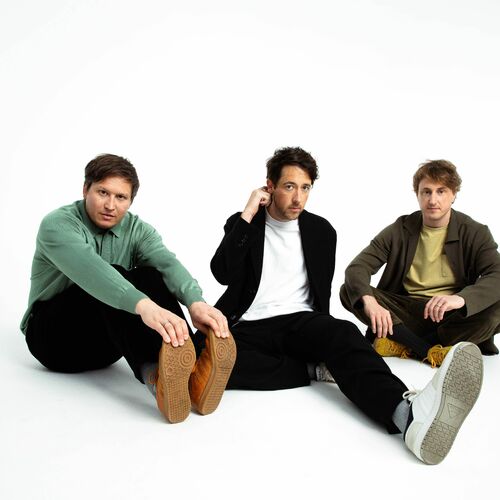 The Womb
-
 Oferta Especial
- JAMMIN*INC
- Jenifer Ávila
-
 Glenn Liljestrand
-
 mandate of heaven
- Drunksouls
- Josh Woodward
- CalmaNiño
- Azeda Booth
- JUANITOS
- dynamo414
People also ask about Creative Commons
Who are the best creative commons artists?
Among the most listened-to creative commons artists are Byron, Please, Professor Kliq, and Brad Sucks.
What is Creative Commons?
Creative Commons (CC) is a non-profit organization devoted to expanding the range of creative works available for others to build upon legally and to share. The organization has released several copyright licenses known as Creative Commons licenses. These lice
What bands should I start with in Creative Commons?
Good entry points into creative commons are Byron, Please, Professor Kliq — widely listened-to and representative of the genre's range.
How popular is Creative Commons?
Creative Commons reaches roughly 2,007 listeners in the Last.fm network, making it a niche genre.
Where can I find more creative commons artists?
Beyond the top artists listed here, related scenes share listeners and sonic traits with Creative Commons and are worth exploring for deeper cuts.